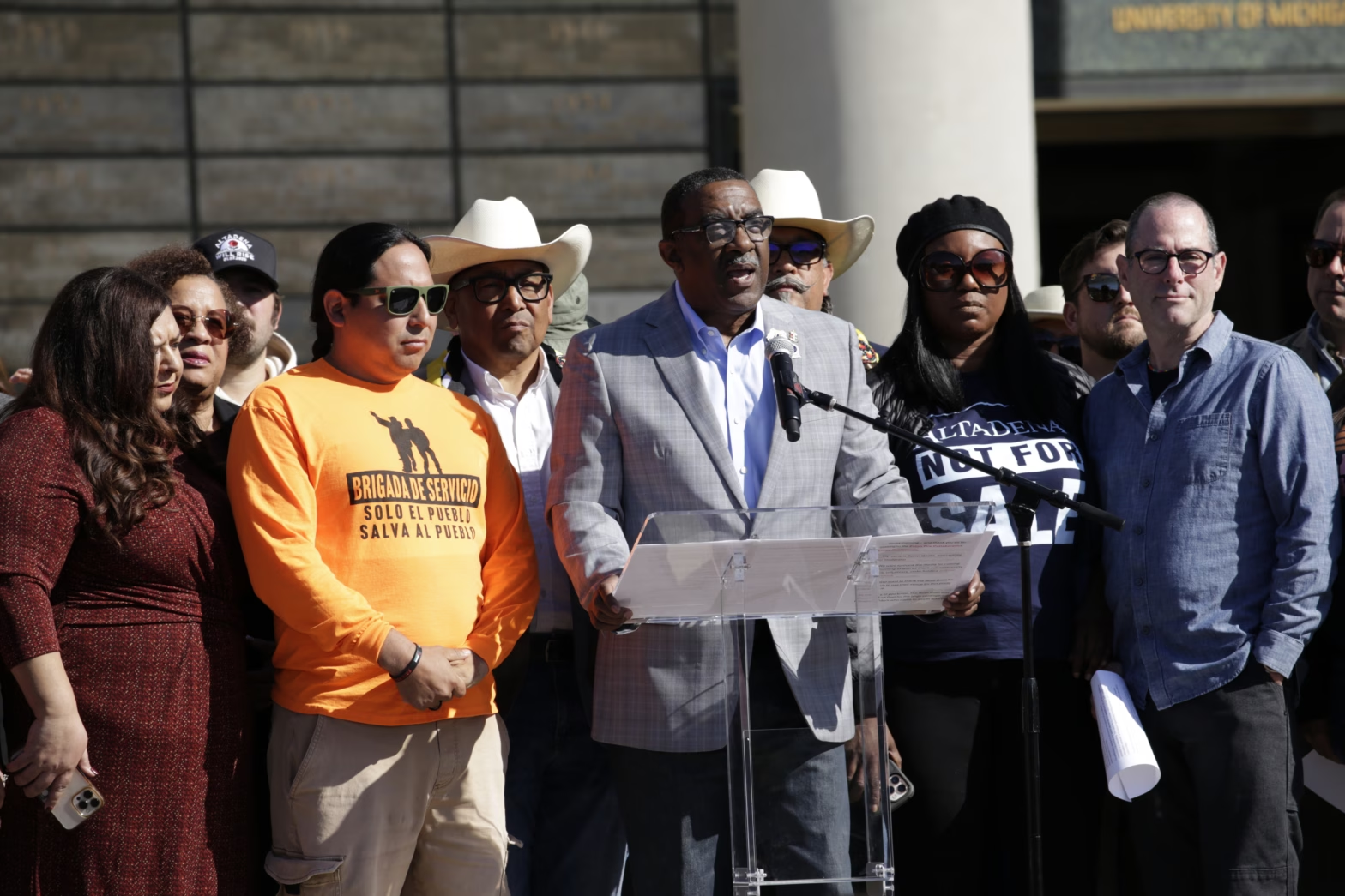
When the Eaton Fire tore through the San Gabriel Valley in January 2025, it left behind more than ash and ruins. Entire neighborhoods in Altadena and Pasadena were erased overnight. More than 9,000 structures were destroyed, tens of thousands of residents were displaced, and a community that had taken generations to build was shattered in a matter of hours. It was one of the most destructive wildfires in California history, and the trauma it left behind was as complex as it was profound.
In the weeks that followed, a coalition of more than 150 local organizations came together with a shared determination: no survivor would be left to navigate the road to recovery alone. That coalition became the Eaton Fire Collaborative (EFC), a Long-Term Recovery Group dedicated to coordinating relief efforts, connecting survivors to resources, and rebuilding not just homes, but community.
But even the most passionate organization needs to be heard. With so many urgent priorities competing for attention (e.g., insurance claims, housing assistance, FEMA navigation, trauma support, etc.), EFC recognized it needed a clear, consistent, and credible voice to reach the survivors and partners who needed them most. That’s when they turned to Jericho Road Pasadena.
JRP matched EFC with volunteer Deborah Braidic, Chief of Staff at Children’s Hospital Los Angeles (CHLA), whose expertise in strategic communications made her an ideal fit for the project’s complexity. Over three months, she developed a comprehensive communications infrastructure from the ground up, which included: a full messaging framework, a brand and style guide, stakeholder mapping across EFC’s 150 member organizations, governance protocols, content approval workflows, and a crisis communications plan.
“Because there was a great deal of work to do in a short amount of time, I knew that I couldn’t let grass grow. I needed to move quickly,” Braidic said. “I could see the empathy that they knew that they wanted to showcase and deliver for their community through their language. My job was to be the translator of that raw material into the exact right language and the perfect tone. And, together, my belief is that we were able to do that.”
Braidic developed channel-by-channel strategies for EFC’s website, newsletter, and social media presence; created a partner toolkit with ready-to-use messaging, graphics, and hashtags for member organizations; and built a comprehensive FAQ to help survivors navigate the often-bewildering landscape of insurance claims, FEMA programs, and housing assistance.
Michael Ocon, recently hired as the first Executive Director of the Eaton Fire Collaborative described both the challenge and the impact in candid terms: “As an emergent, volunteer-led coalition operating in a disaster recovery context, we carry many of the structural challenges typical of a start-up organization, magnified tenfold by the urgency of recovery efforts and the absence of paid staff,” he said. “Nevertheless, Deb was undeterred. She gave it her all and kept us focused.” He noted that the work produced tangible results the organization could put to use immediately: “The final work product included clear communications guidance and foundational materials that now serve as an essential resource for internal alignment and external engagement, supporting our effectiveness as a volunteer-led disaster recovery organization.”
For Braidic, the project was both a professional challenge and a personal commitment. “I had wanted to do something to help fire survivors and was hoping to find a way to do so that was unique to the acumen that I can offer,” she said. “This engagement helped me do exactly that. I was dropping into the EFC’s process at the time that they had decided was “exactly right” for a strategic communications effort and able to turn around some deliverables and some processes and guidelines for the future so that they could do the rest of the work without me.”
The Eaton Fire Collaborative’s story is still being written. Hundreds of families remain displaced. The work of long-term recovery is slow, unglamorous, and essential. It will continue for years. But thanks to the partnership with Jericho Road Pasadena, the EFC now has the voice, the strategy, and the tools to keep showing up for their community, and to make sure the world knows they’re there.
To learn more about the Eaton Fire Collaborative, visit www.eatonfirecollaborative.org.
Want this kind of support? Request a volunteer through our website.
Thanks to volunteer Wes Robinson for writing JRP Project Highlight posts!